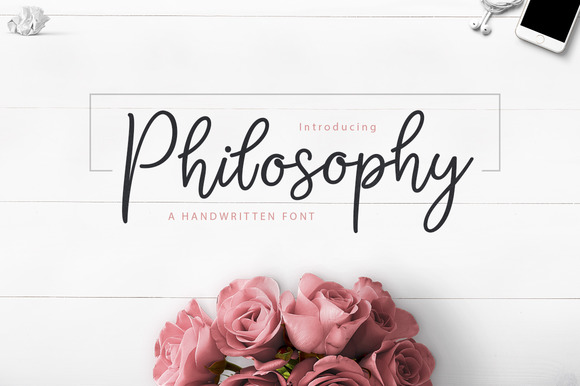
Philosophy Script: A Detailed Evaluation of a Monoline Script Font
In the diverse landscape of typography, script fonts offer a distinct aesthetic, ranging from casual brush strokes to formal calligraphy. Among these, monoline script fonts present a unique balance of elegance and clarity. Philosophy Script is a prominent example within this category, known for its clean, consistent stroke weight and extensive set of glyphs. This article provides an objective evaluation of the Philosophy Script typeface, exploring its characteristics, potential applications, and considerations for designers seeking to incorporate it into their projects.
Understanding the Philosophy Script Typeface
Philosophy Script is defined as a monoline script font. This means all strokes within the letterforms share a uniform thickness, avoiding the contrast between thick and thin lines typical of many traditional scripts. The result is a visually clean and contemporary interpretation of cursive handwriting. The font is notably packed with a large range of different glyphs, including alternate characters and ligatures, which increases its versatility. Key features often highlighted include beautiful long swashes and swirls, which can be applied to add flourish and decorative detail to headings or specific words.
Its design aims to merge the fluidity of script with the readability of a consistent line weight. This combination can be particularly effective in digital and print media where a graceful yet legible aesthetic is desired. As a practical example of its application, this product is featured in a Creative Fabrica Class titled "Create a Thanksgiving Tablescape," demonstrating its use in crafting elegant, thematic designs for event styling.
Reasons for Interest and Potential Benefits
Designers or content creators might evaluate Philosophy Script for several reasons. A primary interest often stems from the need for a script font that maintains clarity across various mediums. The monoline characteristic reduces visual complexity, which can enhance readability at smaller sizes or on screens compared to more ornate, high-contrast scripts.
The extensive glyph set, including swashes and alternates, is a significant benefit. It allows for customization and artistic variation within a single typeface family. Users can create unique word shapes, avoid repetitive character appearances, and add decorative endings to logos, invitations, or title text without needing additional fonts or manual illustration. This can streamline the design process while offering creative flexibility.
The font's overall style—balanced between elegant and modern—makes it a candidate for projects requiring a touch of sophistication without a traditional or overly formal feel. It could be considered for branding elements, website headers, packaging, or promotional materials where a friendly yet refined tone is the goal.
Situations Where Philosophy Script May Be a Strong Fit
- Modern Wedding or Event Stationery: The clean swashes and consistent lines can lend a contemporary elegance to invitations, place cards, and menus.
- Branding for Lifestyle or Creative Businesses: Brands in beauty, artisan crafts, or boutique retail seeking a handcrafted yet polished logo mark.
- Digital Content Headings: For websites or social media graphics where script needs to remain legible on diverse devices without losing its stylistic intent.
- Decorative Text in Product Design: Applied to items like tableware, textile patterns, or gift packaging where the script acts as a subtle decorative element.
Tradeoffs and Important Considerations
While Philosophy Script offers distinct advantages, a balanced evaluation requires acknowledging its tradeoffs and setting realistic expectations. The monoline design, while clear, may not convey the dynamic energy or traditional authority of a variable-weight script. Projects demanding a classic, calligraphic look or a vigorous, brush-script feel might find Philosophy Script too restrained or uniform.
Effective use of the swashes and alternate glyphs requires access to software that supports OpenType features and some user knowledge to implement them. Without this, the font may appear in its basic form, which might not fully realize the decorative potential highlighted in its promotional materials. Additionally, the suitability of extensive swashes depends heavily on context; overuse in body text or in formal documents could hinder readability and appear inappropriate.
Legibility, though generally good for a script due to its monoline structure, remains a consideration for longer text blocks. Script fonts, including Philosophy Script, are typically best reserved for headlines, short phrases, or decorative purposes rather than paragraphs of body copy. Evaluating the specific text length and audience reading conditions is crucial.
Scenarios Where Alternatives May Be Worth Considering
- Projects Requiring Traditional Formality: For legal documents, formal certificates, or announcements requiring a classic copperplate-style script.
- Brands Seeking Rustic or Bold Energy: Alternatives with brush texture, weight variation, or a more casual hand-drawn feel might be better aligned.
- Extended Text Applications: Where significant amounts of copy need to be read, a serif or sans-serif font for body text paired with Philosophy Script for accents would be a more practical solution.
- Budget or Technical Constraints: If OpenType feature access is limited or the project scope cannot utilize the full glyph set, a simpler script font might offer sufficient style without the complexity.
Practical Decision-Making Insights
Determining whether Philosophy Script aligns with your goals involves a practical assessment of your project's needs. First, define the primary role the font will play: is it for a logo, a headline, decorative accents, or something else? Then, evaluate the required tone: modern elegance, traditional grace, casual friendliness, or artistic flourish.
Compare the font's characteristics against these defined needs. If clean consistency, modern script aesthetics, and the option for controlled decoration (via swashes) are high priorities, Philosophy Script is a strong contender. If your project leans towards other tonal qualities or requires a script for long-form reading, exploring alternatives becomes necessary.
Finally, consider technical and workflow compatibility. Ensure your design software can harness the full glyph set to achieve the look you envision. Test the font with your actual text strings, especially those containing letters where swashes or alternates might be used, to see the rendered output. This hands-on testing often provides the clearest insight into whether the typeface's behavior meets your specific expectations and functional requirements.
In summary, Philosophy Script represents a specific point in the script font spectrum—offering monoline clarity with decorative potential through its extensive glyphs and swashes. Its value is most apparent in projects seeking a contemporary, elegant script with good digital legibility and customizable details. A careful evaluation of your project's tone, technical requirements, and the font's inherent tradeoffs will guide you toward a confident selection, whether that ultimately includes Philosophy Script or an alternative better suited to your unique objectives.