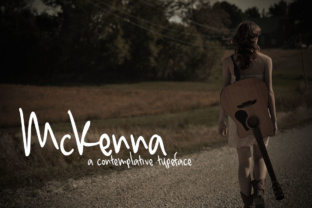
McKenna: The Strategic Power of a Contemplative Script
In a digital landscape saturated with uniform, pixel-perfect fonts, the McKenna script emerges as a deliberate choice. Its handwritten character—the organic flow, the subtle imperfections, the human touch—isn't merely aesthetic. For professionals, creators, and decision-makers, selecting McKenna is a strategic consideration. It’s about choosing a visual tool that can influence perception, enhance communication, and support a more thoughtful approach to your work. When used with intention, McKenna becomes more than a font; it becomes a component of your strategic toolkit.
Intentional Communication and Strategic Positioning
Every element of your communication conveys a message. McKenna’s contemplative style naturally signals authenticity, personal attention, and careful consideration. This can be strategically leveraged in specific contexts. For instance, using McKenna in a key proposal cover page, a personalized client note, or a brand’s mission statement can create a moment of connection. It subtly positions you or your brand as thoughtful, human-centric, and deliberate.
Consider the difference in perception: a standard corporate memo in a sans-serif font communicates efficiency and neutrality. The same message, set in McKenna for a sensitive internal announcement, can soften the delivery and imply a more personal, considered approach from leadership. This isn’t about decoration; it’s about aligning your medium with your message to achieve a specific communicative outcome.
Where McKenna Supports Practical Goals
- Brand Differentiation: In a crowded market, a carefully applied handwritten element in logos, packaging, or curated marketing materials can establish a niche aesthetic of craftsmanship and authenticity.
- Enhanced Learning and Retention: Educators and creators can use McKenna for key annotations, summary headers, or important quotes in materials. Its distinct form can break visual monotony and help highlight crucial information, aiding memory and engagement.
- Creative Ideation and Planning: Using McKenna in your personal planning tools—mind maps, journal headers, brainstorm sheets—can create a psychological shift. It can make the process feel less like a rigid task and more like a exploratory, creative dialogue, potentially unlocking more organic ideas.
- Customer Experience Touchpoints: A handwritten-style thank you note on a receipt, a special offer header in an email, or a welcome message on a website landing page can add a warm, unexpected human touch to digital or automated processes.
A Framework for Decision-Making: When to Use McKenna
Strategic use requires discernment. McKenna is a specialist, not a generalist. Applying it randomly dilutes its power and can confuse your audience. The decision to use it should follow a clear rationale.
Ask these questions before implementation:
- What is the primary emotional or intellectual tone I need to set for this specific piece of communication? Does "contemplative," "personal," or "authentic" align with that goal?
- Is this a highlighted element within a larger, more structured document? McKenna often works best as a accent—for titles, pull-quotes, or summaries—rather than for long body text.
- What are the practical constraints? Will this be printed, viewed on mobile screens, or processed by automated systems? McKenna's detail may require higher resolution prints and can sometimes challenge readability in very small sizes or on complex backgrounds.
- Does it fit the broader visual system? McKenna should complement, not clash with, your existing brand fonts and design logic.
For example, a financial analyst's annual report should likely rely on clear, data-focused typography. However, the opening executive commentary section that discusses the company's vision and values? That might be a legitimate, strategic place to employ McKenna to frame the narrative as a human-led reflection.
The Risks of Unconsidered Application
Without clear goals, McKenna can backfire. Overuse leads to a perceived lack of seriousness or professionalism in contexts that demand clarity and authority. It might make important information appear casual or unstable. Furthermore, if used as a default font for all communications, it loses its distinctive impact and can become a visual cliché. The key risk is misalignment: using a font that speaks of personal contemplation for a message that requires urgent, unambiguous action can create cognitive dissonance for your audience and undermine your intent.
Integrating McKenna into Your Operational Rhythm
For long-term value, integrate McKenna into your processes intentionally. Create a simple style guide rule for its use. For instance: "McKenna is used exclusively for handwritten-style notes in customer packaging, for the titles of internal 'think-piece' memos, and for the headers of our quarterly reflection blog posts." This turns a stylistic choice into a repeatable operational signal that your team and your audience can learn to recognize and interpret.
In personal productivity, you might designate McKenna as your font for weekly review documents and goal-setting worksheets. This ritualizes the transition from tactical execution to strategic thinking, using the font's aesthetic to cue a different mindset. The act becomes a deliberate practice, reinforcing the link between your tools and your desired outcomes.
Planning for Cohesive Visual Outcomes
When planning a project, consider where a moment of handwritten authenticity could enhance the journey. Map out the user or reader's path and identify one or two key inflection points where a more personal tone would be valuable.
- A software developer might use McKenna in the onboarding screen that welcomes a new user to a creative app.
- A consultant might use it for the title page of a final strategic recommendation delivered to a long-term client.
- A blogger might use it exclusively for the "Key Takeaway" summary box at the end of each deep-dive article.
This planned, limited application ensures McKenna serves a function, supports a broader goal, and contributes to a cohesive, multi-textured experience without overwhelming the core message.
Crafting Better Results with Intentional Tools
Ultimately, tools like the McKenna script remind us that form and function are intertwined. A deliberate choice in typography is a low-cost, high-impact lever for shaping perception and behavior. It asks you to be more thoughtful about how you communicate, plan, and present your work. By moving beyond the default and selecting McKenna only when its unique properties serve a clear strategic purpose, you elevate your craft. You move from simply producing content to curating experiences and signals that guide your audience and yourself toward better understanding, deeper connection, and more meaningful results.
The power of McKenna isn't unlocked by simply installing the font. It's unlocked by the strategy behind its use. It becomes valuable when you answer the critical question: not "Do I like this font?" but "What specific outcome can this font help me achieve here?" When you apply it with that discipline, McKenna transitions from a contemplative script on your screen to a contemplative practice in your work.